

May Sketch Notes
A re-cap on what I have seen and sketched this month

Welcome to my catch-up for the month of May. Here I give a little insight to what I have seen and sketched in my corner of Ireland during the month.
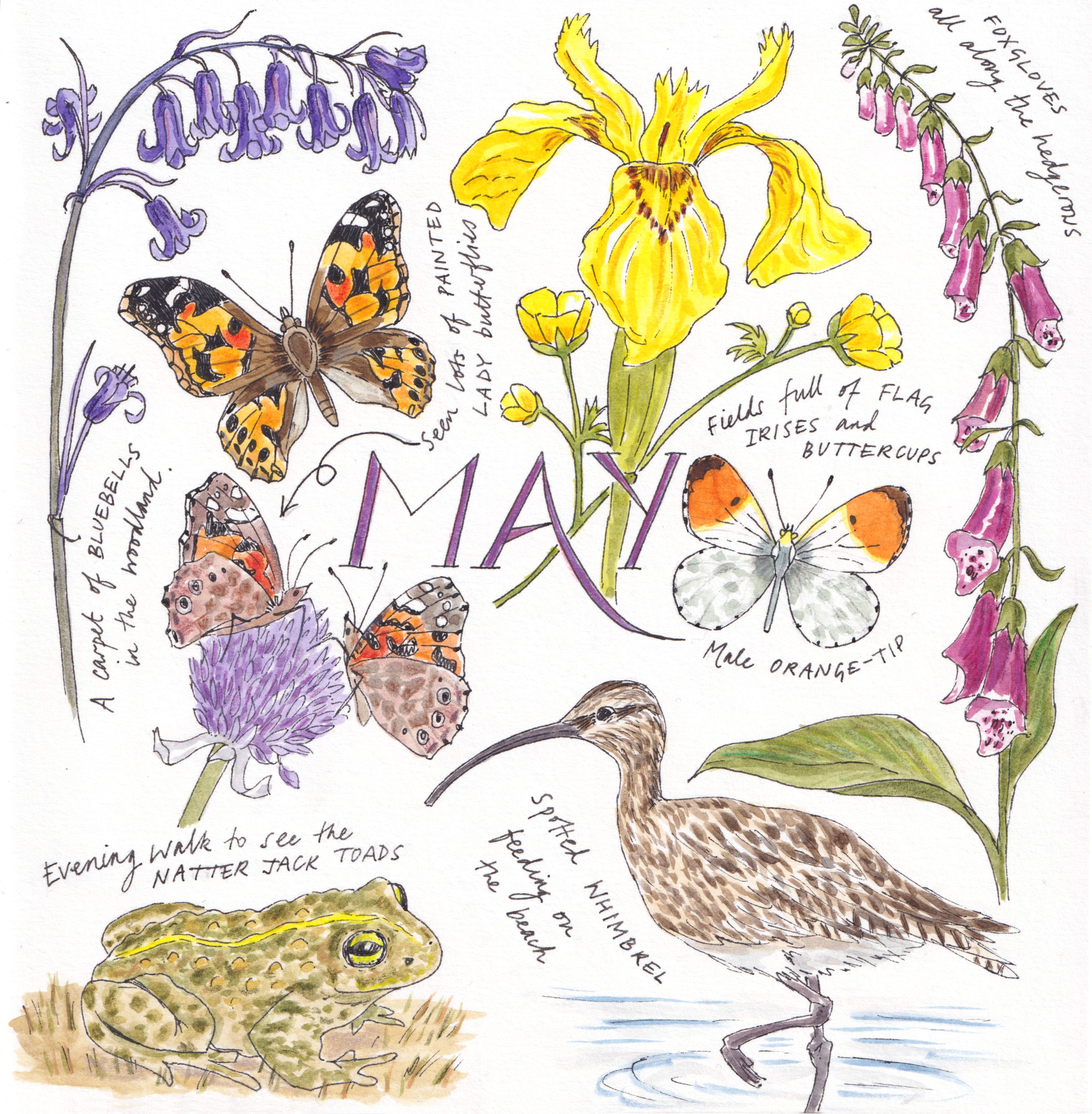
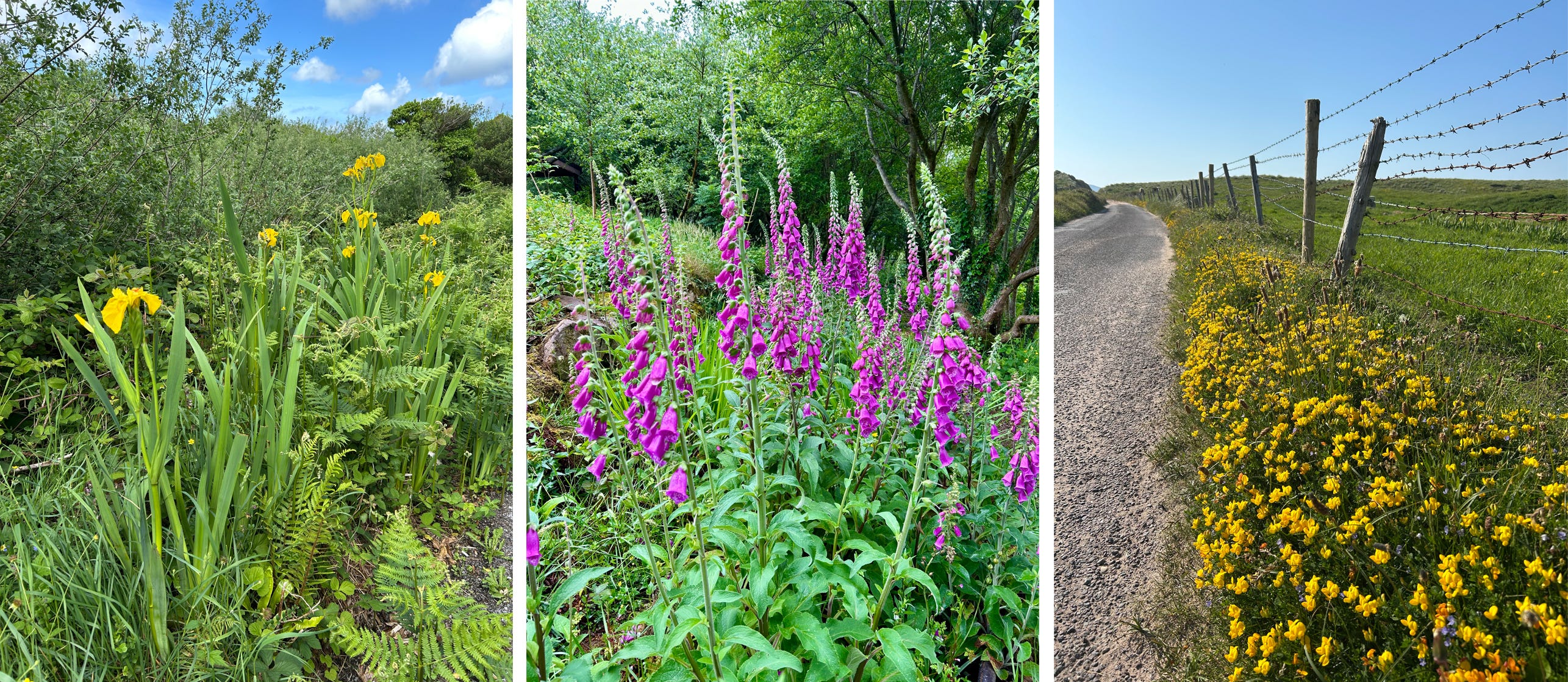
May is a generous month of wild growth; all the trees are in leaf, the hedgerows are covered in hawthorn blossom and the verges full of foxgloves, cow parsley and, this year especially, yellow kidney-vetch. The damp fields come alive with bright yellow flag irises, buttercups, and the airy pink flowers of ragged robin. I feel very grateful to be so spoilt for choice in what to sketch.
Walks in the Woods
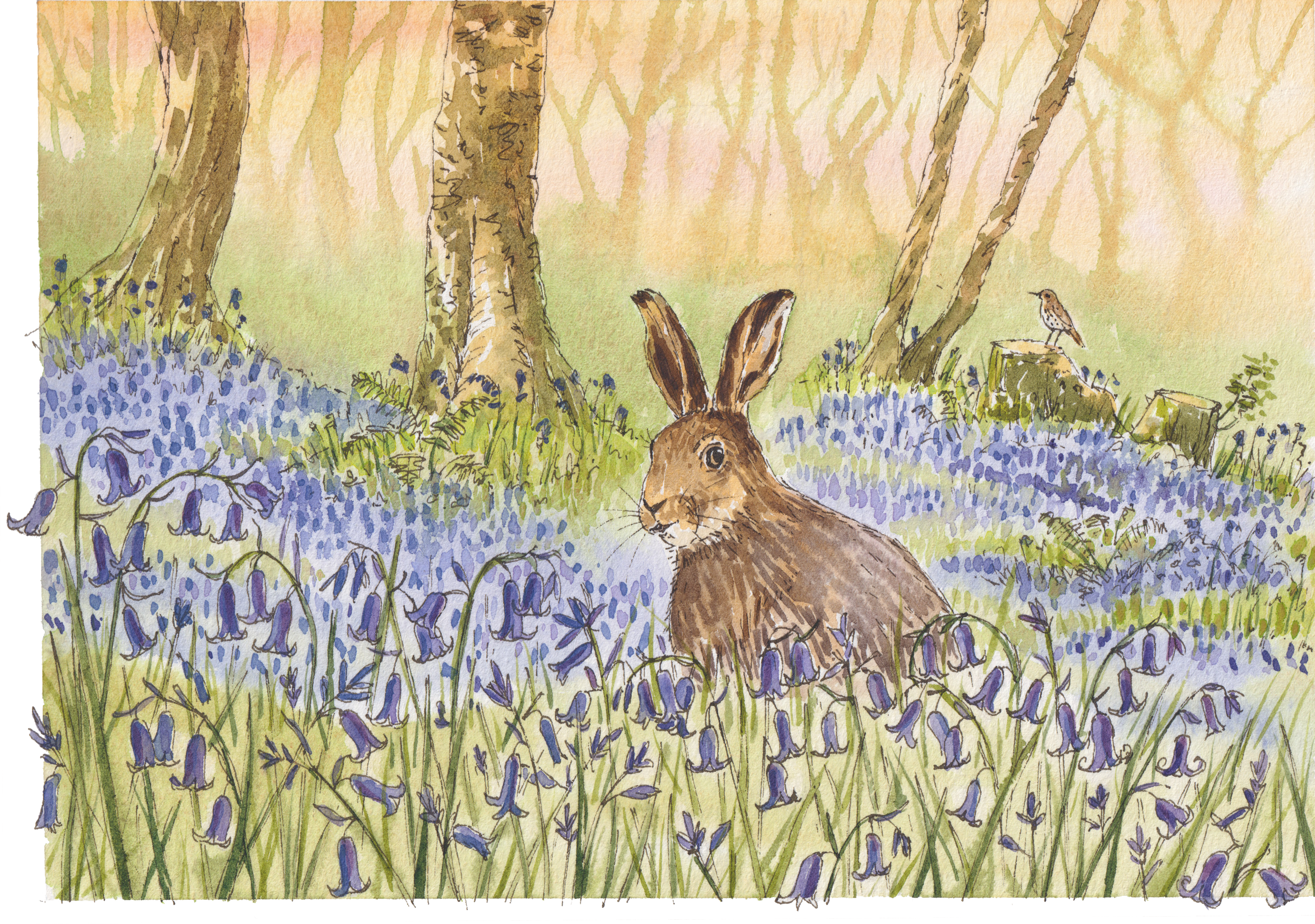
I enjoyed several woodland walks during the month, the most memorable being my early morning sketching visit to the bluebell woods (which I wrote about here). Being immersed in the carpet of bluebells, sketching under the dappled light and listening to the bird song was a one of those wonderful nature experiences where you just enjoy ‘being’. The bluebell season is fleeting so it is well worth seeking out a bluebell wood to enjoy if you can. Even after the flowers had faded I used my sketch and photographs from the walk to create another piece back at home. While I had been walking down the path into the woods, I saw a hare, who gave me a fleeting stare, before darting off through the bluebells - a magical moment!
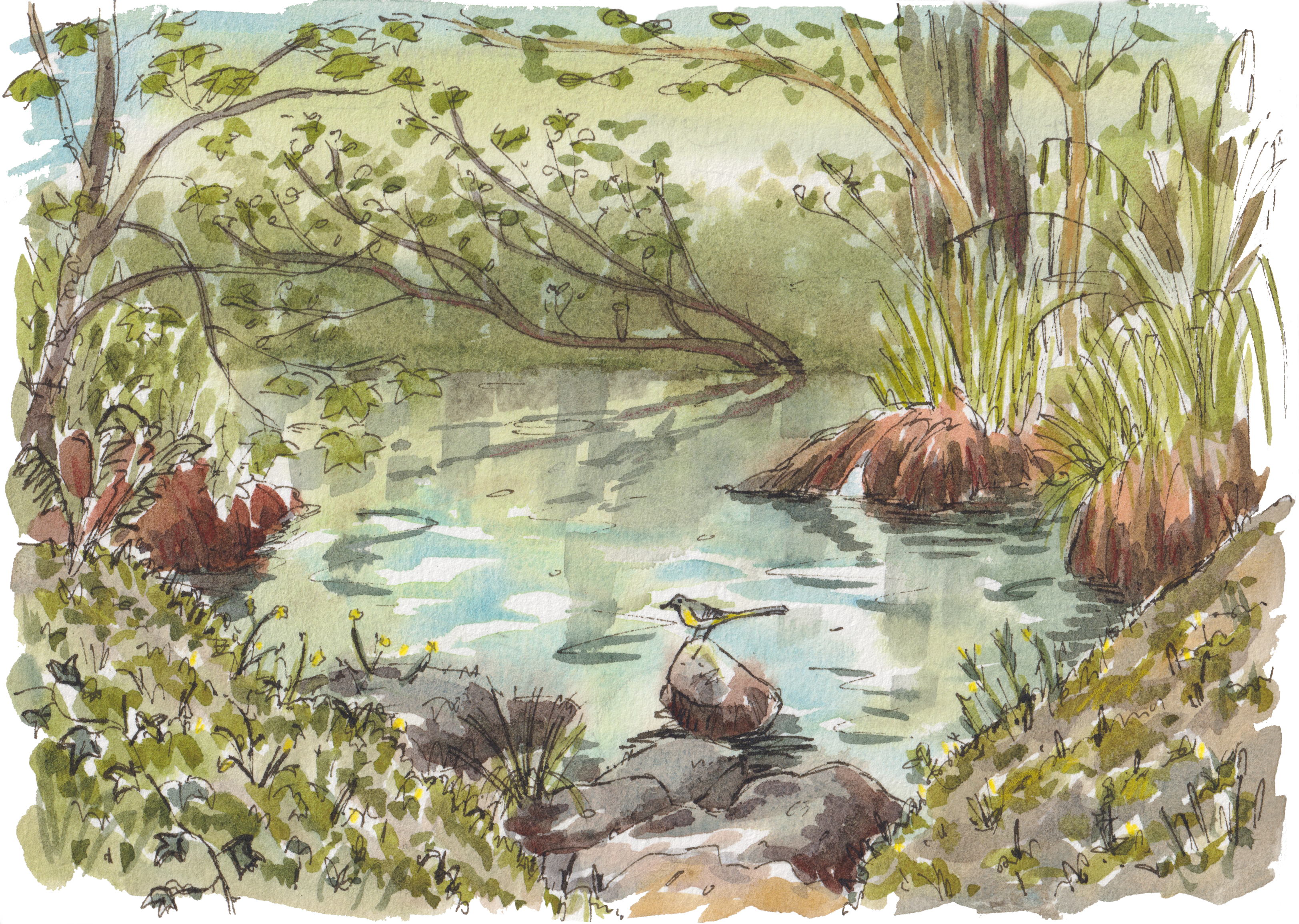
On another occasion I took my sketchbook to a different wood, where I had seen the wild garlic blooming in April. The garlic flowers were over, but the warmth of the day was still releasing a gentle garlic aroma in the air as I walked through the trees. The canopy overhead was closing over, as by now most of the trees have burst into their full leafy splendour. As it was the beginning of a warm day, I was pleased to sit in a shady spot by the little river that runs through these woods. As I sat and sketched, I could hear calls of wrens, great tits, willow warblers and blackbirds, all probably feeding their chicks, as the nesting season is well underway. I had hoped I might spot the kingfisher again, but sadly not this time. Although there was a grey wagtail, with its yellow chest and rump, darting around amongst the rocks in the water, which was a delight to see.
Shoreline songs and acrobatics
Now the daylight is longer, stretching on to almost sixteen and a half hours by the end of the month, the lengthy evenings are perfect for walks on the beach.
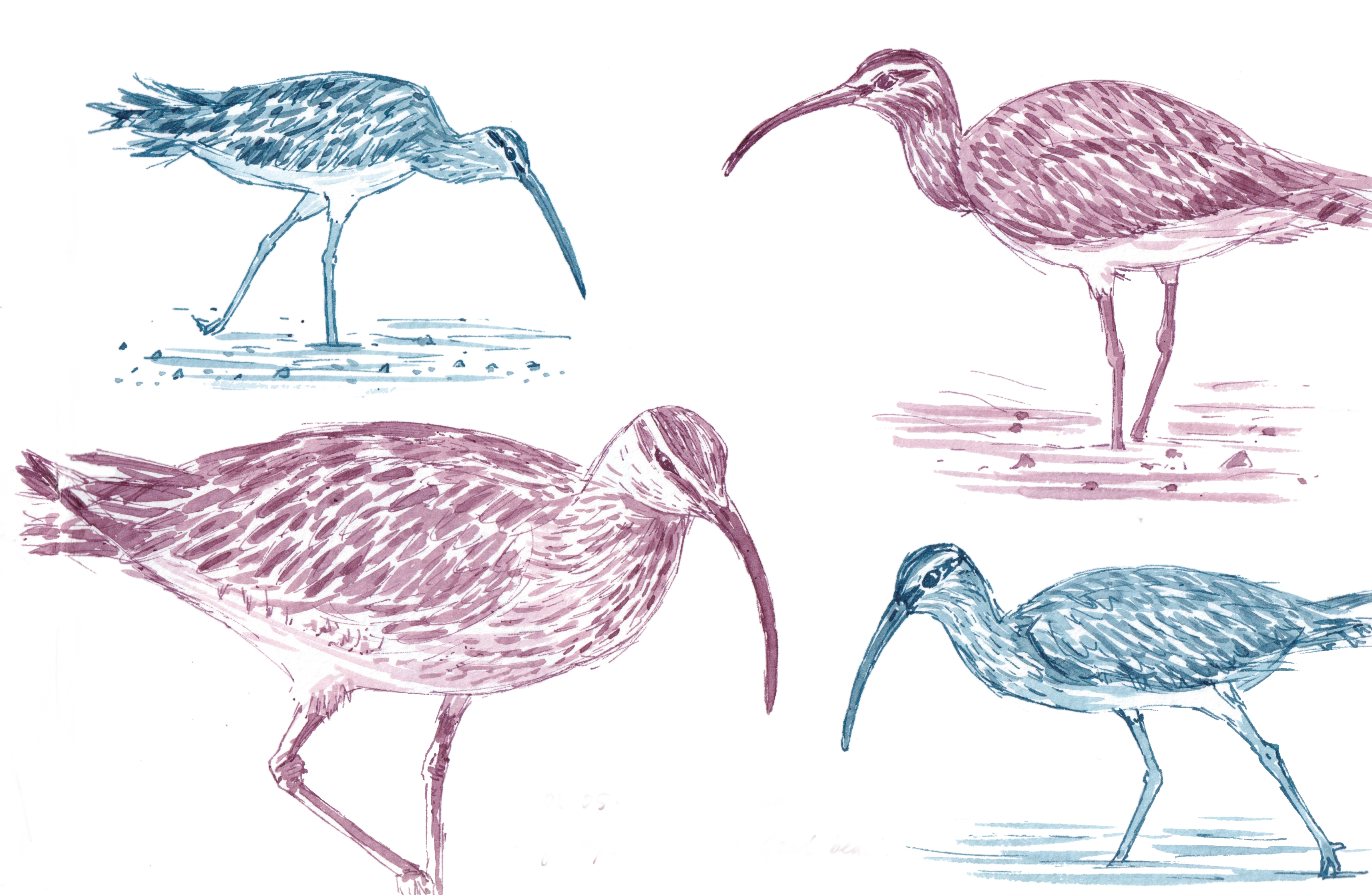
At the beginning of the month I noticed a different group of birds feeding on the shoreline. With their long curved bills and streaky brown markings, you could easily mistake them for curlew. However a second look reveals a dark stripe through their eye and a shorter bill. These are whimbrel1. Not a breeding native, like the curlew, but a passing migrant, using the Irish shores as a convenient lay-over on their way from wintering in Africa to breeding grounds in Iceland and Scandinavia. Their refuelling stop didn’t last long, and after a week of seeing them, they were gone again. Their appearance in May has been so dependable, that they are often know as the May bird, or May curlew, a sure sign of summer beginning.
Another sound of summer is the melodious song of the skylark, which I hear often when walking through the dunes and onto the beach. These small birds soar high into the sky, so if you spot them they are just a tiny speck, all the time singing their beautiful song. I spent a peaceful hour sketching cowslips among the dunes, and the whole time skylarks were serenading me (well obviously it wasn’t really for my benefit) from high above the beach.
Turn up the volume of the clip below to hear the skylarks singing as I sketched:
In an equally showy spectacle of a different kind, the air on certain beaches with sandy cliffs have been full of sand martins2 chattering and calling as they zip around and skimming over the ocean. They look like they are purely having fun, but presumably they are catching insects.
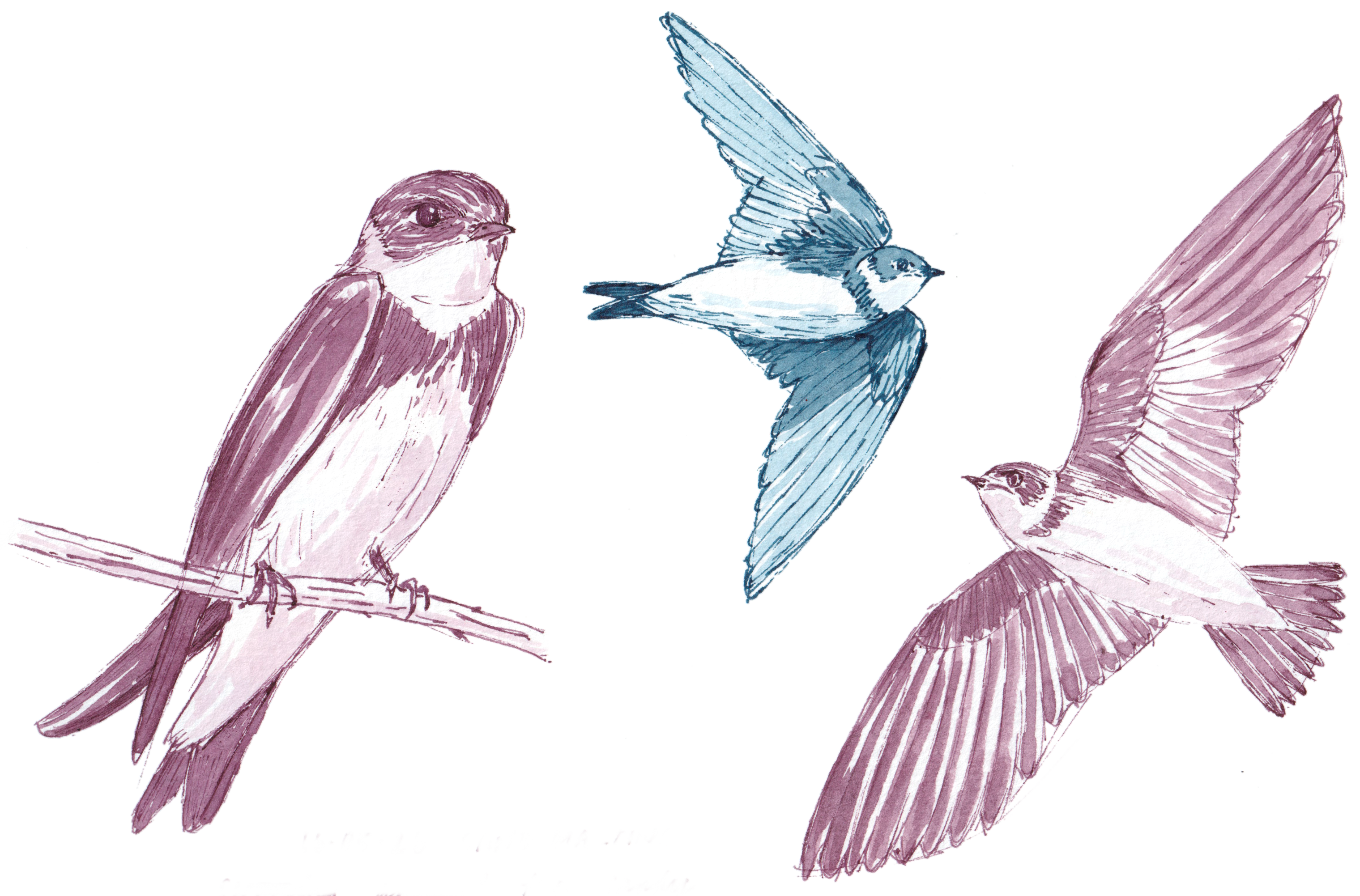
The low mud and sand cliffs are pock-marked with holes that the sand martins use as nests. Sand martins are the smallest of the swallow family that visit these shores3 (another summer migrant from Africa), so it may come as a surprise that these little, stocky birds dig their nesting tunnels with their feet! Given that the tunnels can reach up to a metre into the cliff, it is no wonder sand martins return back, year after year, to the same breeding sites and nesting holes.
Beautiful butterflies
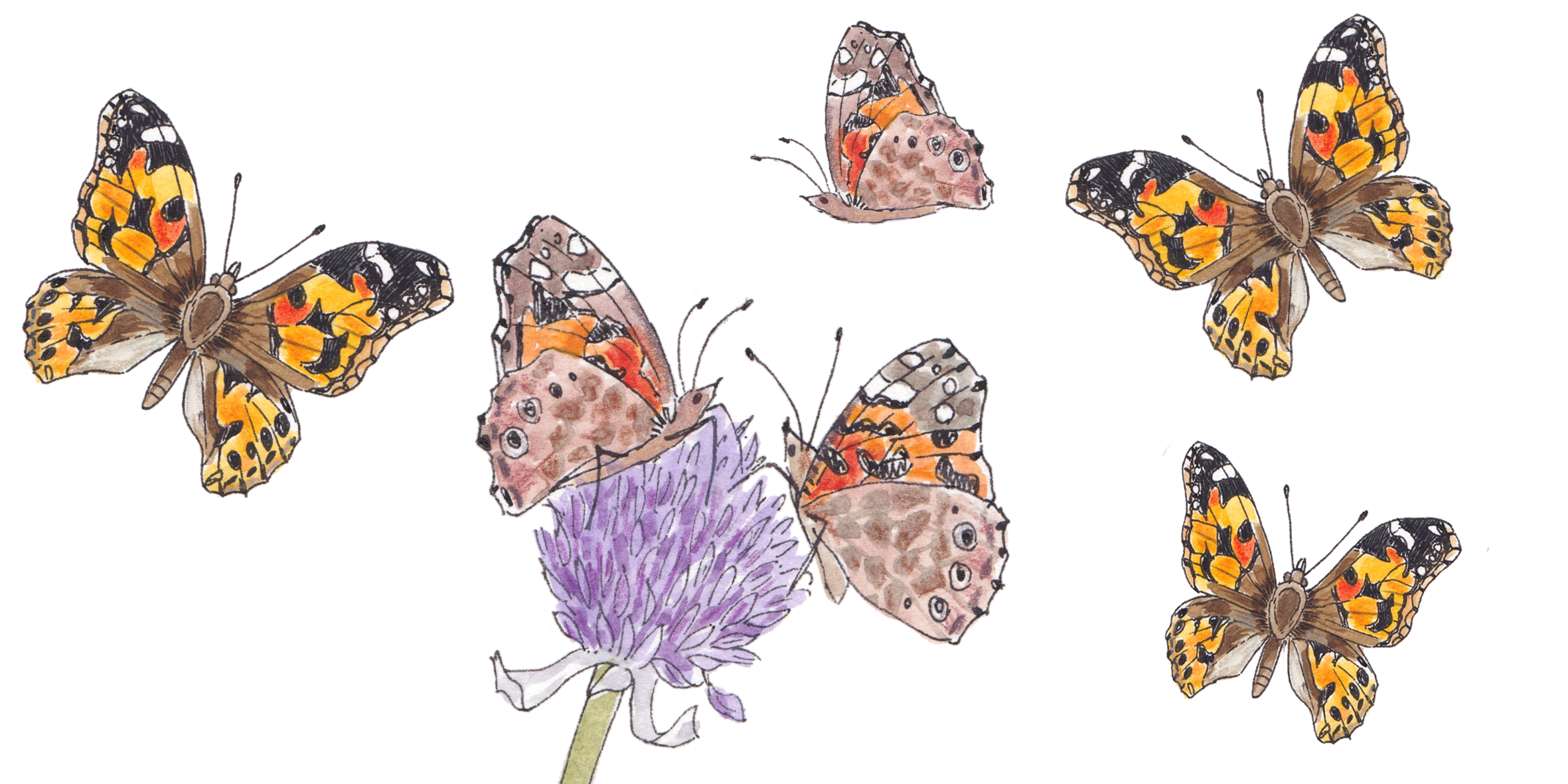
While it is incredible that birds like the whimbrel, sand martins and swallows migrate such distances from Africa, I find it even more remarkable that butterflies do the same thing. This month there was been a huge number of painted lady butterflies in the garden, more than I remember in other years, reminding me of my childhood when butterflies seem to cover plants and bushes4. While out in the sea (helping the children surf) I spotted at least ten painted ladies flying over the water to the shore. These were likely butterflies migrating from southern Europe, on their way to breed here in Ireland. But this isn’t even where their migration started; a generation before had made the journey from the sub-Sahara. They then bred in Spain and France and this next generation will fly north, some of which make their way to Ireland. At the end of the summer, some of these will then make a return journey, flying at altitudes of over 500 metres back to Africa again. This is the migration pattern for European/African5 painted ladies, but they are one of the most widespread butterflies in the world, so you may have seen them where you live too.
Favourite wildlife spots this month..
One of my favourite wildlife encounters this month, was listening to the song of natterjack toads and seeing them in their breeding ponds in the dune slacks. These are very rare in Ireland, so it was fabulous to attend a guided walk to see them. I’ll write a little more about them and their special habitat in my mid-month article in June.
We also had a family of great tits take up residence in our post box. Luckily my son found the nest before the postman’s letters did! For a few weeks the chicks were very vocal, and we saw the diligent parents going back and forth with insect nourishment. By the end of the month the chicks had fledged and hopefully they have gone off successfully into the world.
Lastly…
If you want to find out more about skylarks in Ireland, including folklore and music relating to them, this lovely podcast episode is an enjoyable listen.
One of the presenters on the podcast is Anja Murray, an Irish ecologist, who has written a wonderful book; Frog Routes, Polka-Dot Newts, which gives fabulous insights to Irish wildlife, and has sections on some of the topics I have written about.
I hope you have enjoyed reading about May in my corner of Ireland. Everything has accelerated at such a rate, there was so much more I could have written!
What does May look like in your part of the world, leave me a comment, as I’d love to know.
Sometimes called bank swallows.
My own evidence of the ‘shifting baseline’ effect where my children think only one or two butterflies in the garden is the norm.
Your work is very beautiful and also informative
Thank you for this beautifully written and illustrated article. It's so nice to hear what is going on in the Northern Hemisphere, while living in the south. I was so excited to see the Gray Wagtail made its appearance. We were so lucky here on the Southern Coast of South Africa last summer, with 2 lone Gray Wagtails making their appearance in the Botanical Gardens. They were very far off their course and brought so much joy to photographers and bird lovers alike.